How Can Operational Safety Be Ensured When Port Stacker Cranes Have Limited Visibility? The 360-Degree Panoramic Surround View Driver Assistance System Provides the Answer

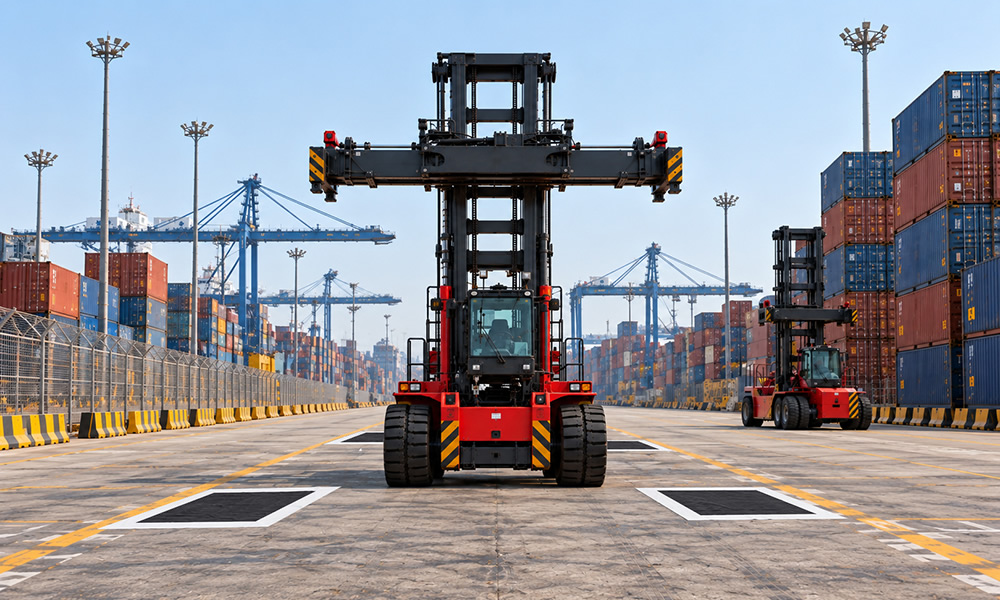
At port terminals, container yards, and cargo yards, stacker cranes play a vital role in ensuring loading and unloading efficiency. However, precisely because of the complex operating environment—with high cabs, long vehicle bodies, and forklift tines obstructing the driver’s view, compounded by insufficient nighttime lighting, the mixing of pedestrians and vehicles, and densely packed rows of containers—helping drivers “see more clearly” has become a critical factor in improving operational safety.

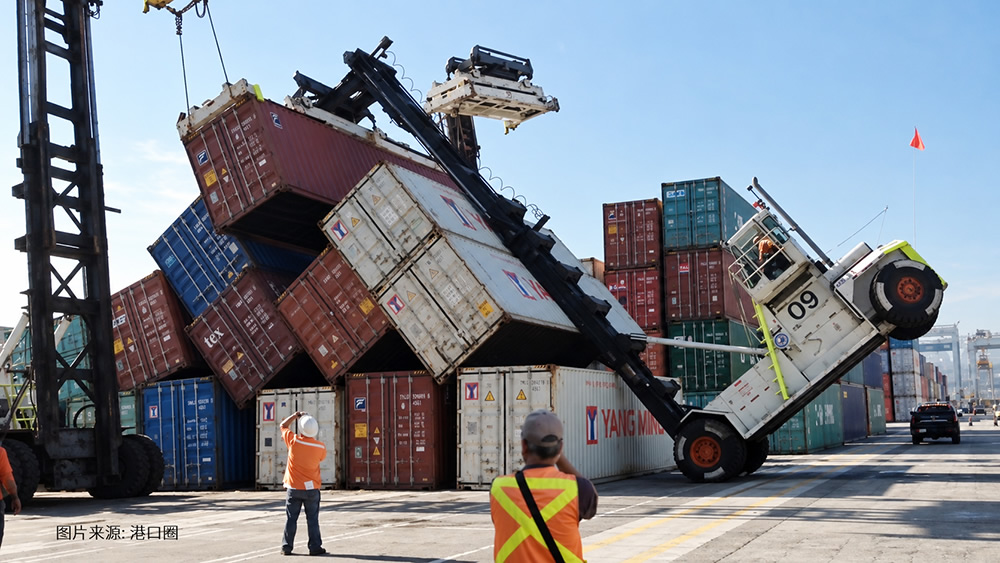

High-seat position in the cab: During lifting operations, the forks and mast obstruct the view of low-lying areas below and in front of the vehicle;
Long wheelbase + wide body: When reversing or maneuvering between work areas, the sides and the area directly behind the vehicle are completely out of sight;
Complex yard environment: With trucks passing through, stock clerks patrolling, and pedestrians and stacker cranes crossing paths at close range, even a single collision can result in a major accident;
Nighttime and Foggy/Rainy Conditions: Round-the-clock operations are the norm at ports; without supplementary lighting and image enhancement, cameras are essentially “useless.”
Traditional rearview mirrors and backup sensors can only cover a single direction and fail to address the stacker’s all-around blind spots. So, how can we enable stacker operators to “see right through” the vehicle’s surroundings at a glance and eliminate safety hazards in port yards?
Wide-angle camera, 360° coverage with no blind spots in the yard
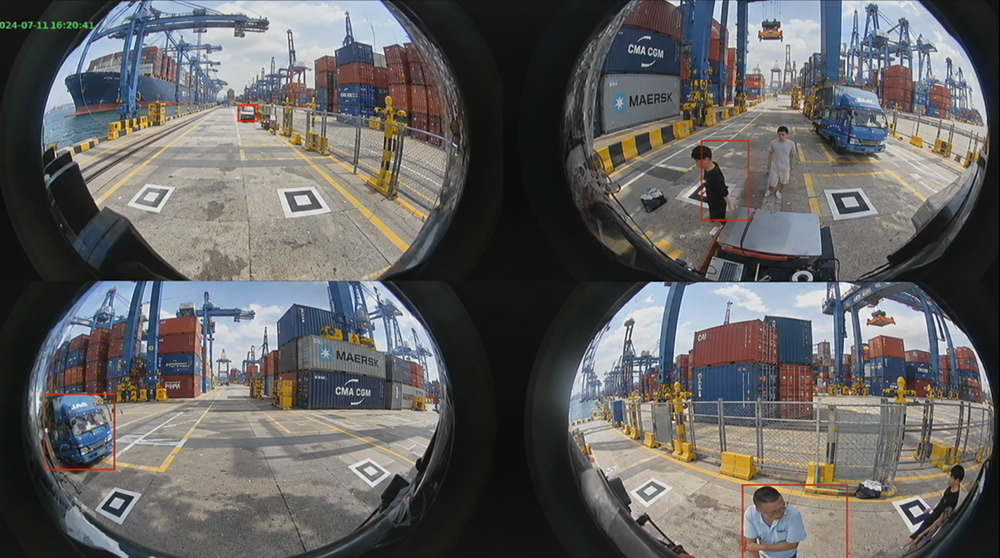
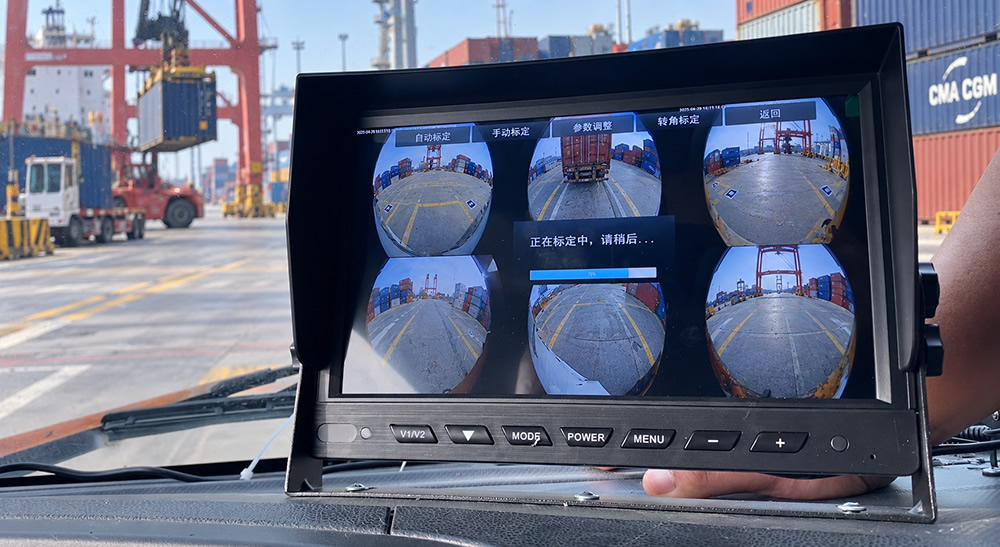
The system deploys 1080p high-definition ultra-wide-angle cameras at the front, rear, and both sides of the stacker (cameras can be added based on the vehicle model) to capture real-time footage of the vehicle’s surroundings. Through image distortion correction and **seamless stitching algorithms**, the system synthesizes a complete 360° bird’s-eye-view panoramic image displayed on the cab monitor.
From the cab, the operator can view the entire area surrounding the vehicle—including beneath the forks, behind the rear of the truck, and blind spots near the wheels—with complete visibility. Even at night or in rainy or foggy conditions, the image remains clear, ensuring true all-weather visibility of blind spots.
To address issues such as obstructed visibility and positioning difficulties when containers are stacked at high elevations, the system uses high-definition cameras to display real-time alignment between the container and the target stacking position. This eliminates operational blind spots, enables precise positioning and safe stacking, effectively reduces the risk of collisions, and enhances operational efficiency and safety.


Maximize Port Operations: Eliminate Production Downtime for Equipment Calibration
For ports, operational continuity is critical, and minimizing equipment downtime is key to reducing costs and improving efficiency. Traditional panoramic system calibration not only requires laying out calibration mats but also involves manual, repetitive parameter adjustments—a process that often takes half a day or more.
Once the calibration mat is laid out, this system supports one-click automatic calibration: it automatically calculates camera parameters in about one minute, generating a high-precision, distortion-free panoramic image.
Whether it’s installing new equipment on stacker cranes, replacing systems during major terminal overhauls, or deploying the system to an entire fleet, the solution can be quickly brought online and is ready to use immediately, minimizing disruption to port operations.


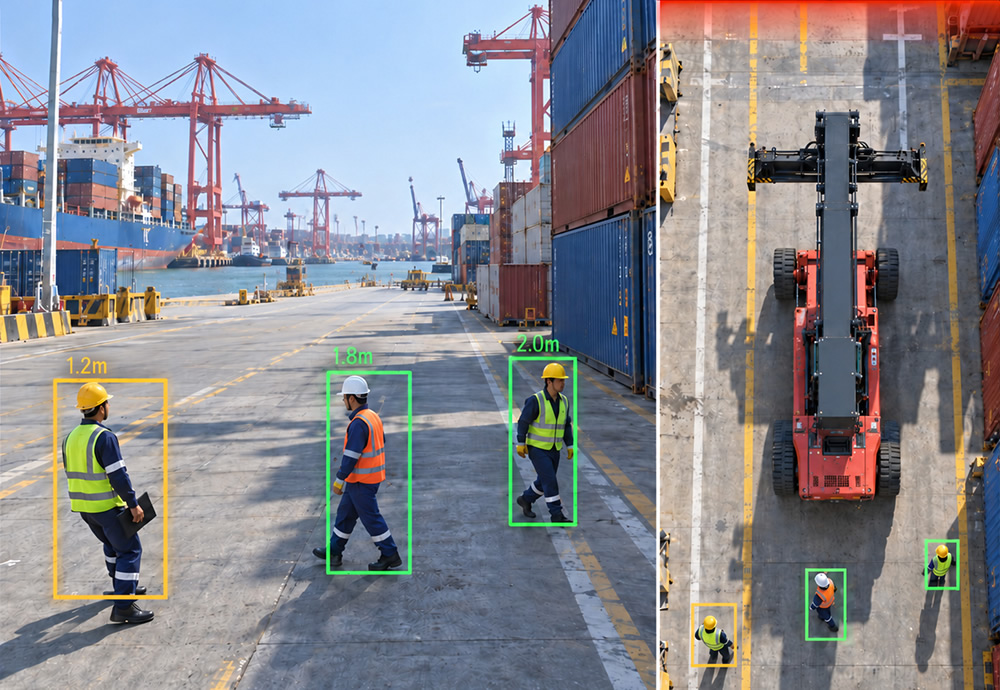
Panoramic views are merely “visible”; this system goes a step further by making them “understandable.”
The system features a built-in “AI Pedestrian Detection Algorithm” that utilizes the panoramic camera to identify pedestrians, warehouse workers, and truck drivers in the vicinity of the vehicle in real time;
When the system detects people entering a danger zone, it triggers an “immediate audible and visual alarm” to alert the driver and nearby personnel;
The display “switches to the view of the risk location,” allowing the driver to pinpoint the source of the hazard immediately. It supports “seamless switching between 2D top-down and 3D surround views,” providing the most intuitive viewing angles during different operating conditions such as lifting, driving, and reversing;

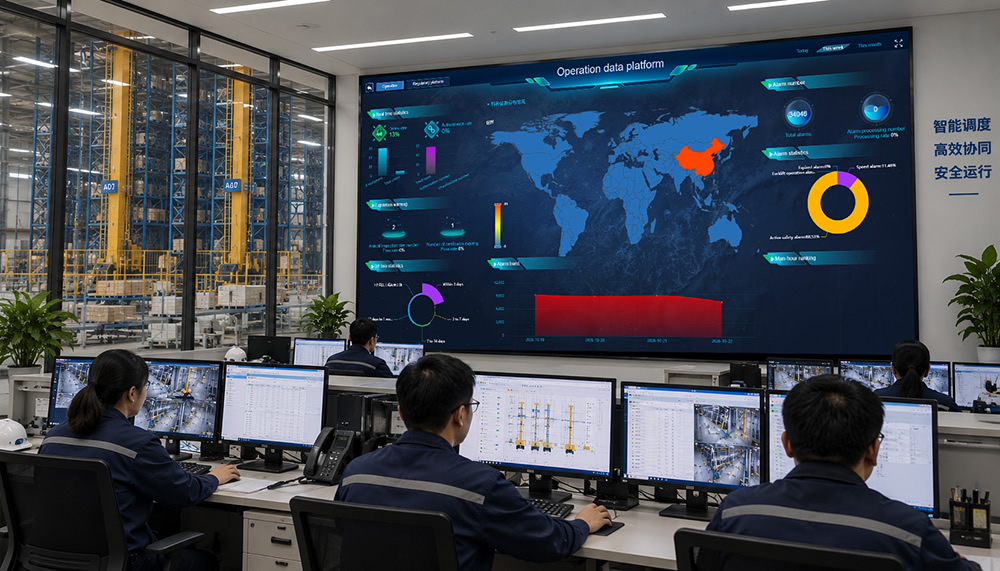
Management Platform: Keep Port Fleet Safety Under Control
Remote Vehicle Management: Real-time visibility into device online status and location distribution
Automatic Upload of Alarm Footage: Video footage before and after collisions and pedestrian warnings is archived in the cloud, ensuring clear and traceable accountability for accidents
Driver Behavior Analysis: Quantitative statistics on sharp turns, speeding, and Non-compliant operation , supporting safety evaluations and training
Device Health Monitoring: Automatic reporting of camera obstructions, offline status, and malfunctions ensures long-term, reliable system operation.


Bicycle safety alone is not enough; ports need “comprehensive safety management for their entire fleet of forklifts and stacker cranes,” ensuring that every blind spot and potential hazard is documented, traceable, and addressable—helping ports shift from “post-incident accountability” to “preemptive prevention.”
【Leaping Forward to a New Journey, Advancing with United Strength】 Tamsong's 12th Anniversary Celebration Concludes Successfully: Writing a Glorious Chapter in the Name of Passion!
Related Article